 |
|  |
|  |
|  |
|  |
|  |
|  |
|  |
|  |
|  |
| ` element containing the common followers. | No | - |
---
# Profile Socials
The Profile Socials component displays the social links of a user, including URLs and decentralized web links.
### Add to your project
```tsx copy
import { ProfileSocials } from 'ethereum-identity-kit'
export default function Home() {
return 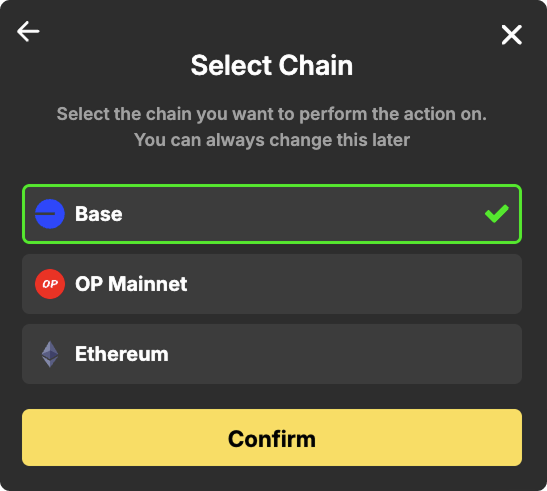
 ## Parameters
| Parameter | Description | Required | Default Value |
| --------------------- | -------------------------------------------------------------- | -------- | ------------- |
| `darkMode` | Enables dark mode styling for the transaction modal. | No | false |
| `showRecommendations` | Enables recommendations for the cart modal. | No | true |
| `onCartProfileClick` | The function to call when a profile is clicked. | No | - |
| `showPoapClaim` | Whether to show the POAP claim modal after minting a new list. | No | false |
| `className` | Additional CSS class names to apply to the transaction modal. | No | - |
| `props` | Additional HTML div element props. | No | - |
### Features
- **Batch Transactions**: Allows users to manage multiple transactions at once.
- **Chain Selector**: Provides an interface for selecting the blockchain network.
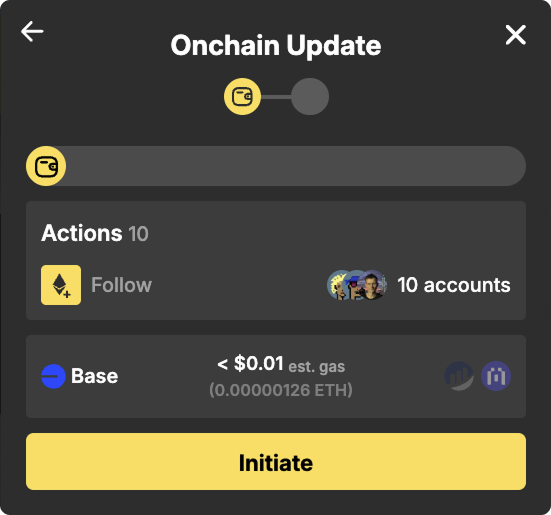
- **Transaction Summary**: Displays a summary of all pending transactions.
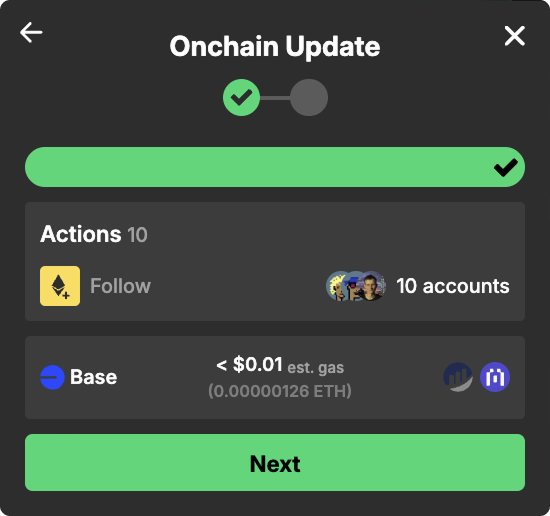
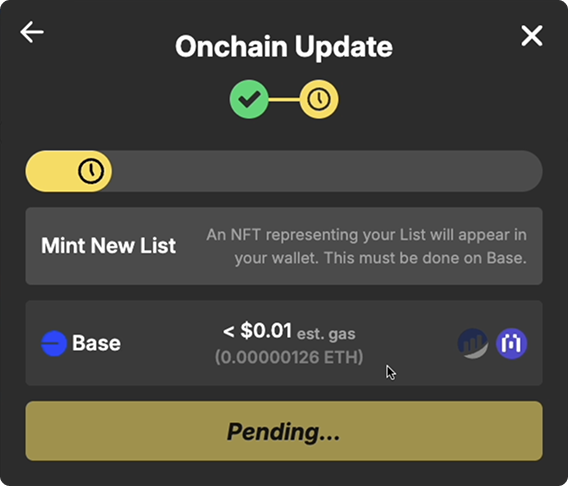
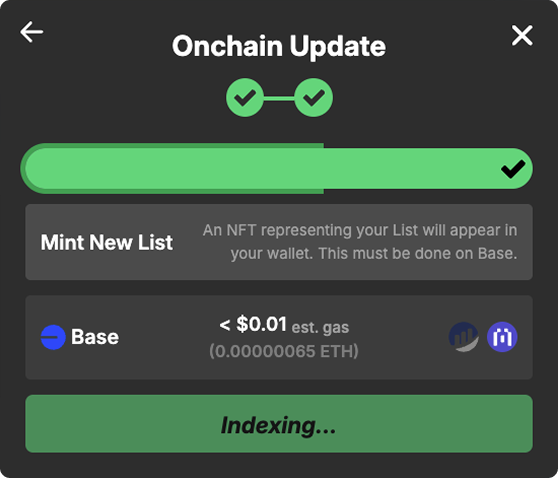
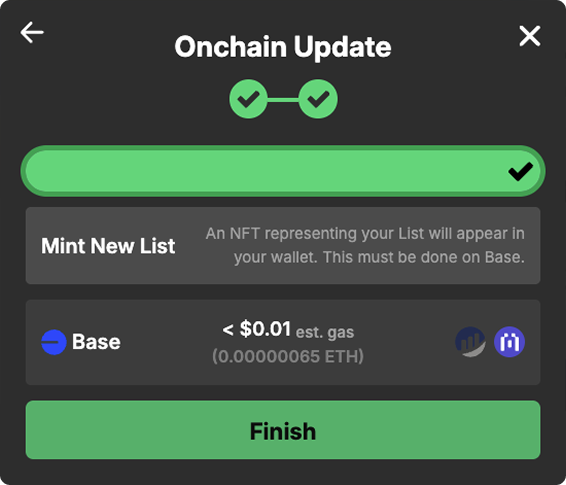
- **Transaction Flow**: Nice transaction flow with good visual feedback and animations.
### Styling
The component uses predefined styles and can be further customized using the `className` prop. The appearance of the modal can be manually toggled between light and dark modes using the `darkMode` prop, however, if you have a `dark` class applied in your application, the modal will automatically use that.
### Notes
- The modal is controlled by the `txModalOpen` state from the [`useTransactions`](https://ethidentitykit.com/docs/hooks/useTransactions) context, which determines its visibility.
- Ensure that the `TransactionModal` is wrapped within a [TransactionProvider](https://ethidentitykit.com/docs/components/transaction-provider) that supplies the necessary transaction context.
Transaction Provider parameters:
- batchTransactions (boolean) - Whether to batch transactions or not (default: false). This will allow yout to either execute transactions one by one or batch them together and have a cart-like experience.
---
# Avatar
The Avatar component displays an avatar image for a given Ethereum address or ENS name, with support for fallback images.
### Add to your project
```tsx copy
import { Avatar } from 'ethereum-identity-kit'
export default function Home() {
return
## Parameters
| Parameter | Description | Required | Default Value |
| --------------------- | -------------------------------------------------------------- | -------- | ------------- |
| `darkMode` | Enables dark mode styling for the transaction modal. | No | false |
| `showRecommendations` | Enables recommendations for the cart modal. | No | true |
| `onCartProfileClick` | The function to call when a profile is clicked. | No | - |
| `showPoapClaim` | Whether to show the POAP claim modal after minting a new list. | No | false |
| `className` | Additional CSS class names to apply to the transaction modal. | No | - |
| `props` | Additional HTML div element props. | No | - |
### Features
- **Batch Transactions**: Allows users to manage multiple transactions at once.
- **Chain Selector**: Provides an interface for selecting the blockchain network.
- **Transaction Summary**: Displays a summary of all pending transactions.
- **Transaction Flow**: Nice transaction flow with good visual feedback and animations.
### Styling
The component uses predefined styles and can be further customized using the `className` prop. The appearance of the modal can be manually toggled between light and dark modes using the `darkMode` prop, however, if you have a `dark` class applied in your application, the modal will automatically use that.
### Notes
- The modal is controlled by the `txModalOpen` state from the [`useTransactions`](https://ethidentitykit.com/docs/hooks/useTransactions) context, which determines its visibility.
- Ensure that the `TransactionModal` is wrapped within a [TransactionProvider](https://ethidentitykit.com/docs/components/transaction-provider) that supplies the necessary transaction context.
Transaction Provider parameters:
- batchTransactions (boolean) - Whether to batch transactions or not (default: false). This will allow yout to either execute transactions one by one or batch them together and have a cart-like experience.
---
# Avatar
The Avatar component displays an avatar image for a given Ethereum address or ENS name, with support for fallback images.
### Add to your project
```tsx copy
import { Avatar } from 'ethereum-identity-kit'
export default function Home() {
return
The transaction modal displayed here has the "batchTransactions" prop set to false. Meaning it will open
only if you submit a transaction. Pressing the follow button will open the transaction modal.
` element containing the avatar. | No | - |
---
# Profile Stats
The Profile Stats component displays follower and following statistics for a given Ethereum address or ENS name.
### Add to your project
```tsx copy
import { ProfileStats } from 'ethereum-identity-kit'
export default function Home() {
return
` element. | No | - |
---
# Follower Tag
The Follower Tag component displays the relationship status between a given Ethereum address and the connected user, such as whether the user follows, blocks, or mutes the address.
### Add to your project
```tsx copy
import { FollowerTag } from 'ethereum-identity-kit'
export default function Home() {
return (
` element containing the follower tag. | No | - |
---
# Full Width Profile
The Full Width Profile component displays a comprehensive Ethereum Profile with ENS and EFP details like:
- Avatar and Header Image
- Name and Status
- Role (if provided)
- Description (Bio)
- Follower State (follows you, blocks you, mutes you)
- Profile Statistics (Followers, Following)
- Common Followers
- Social Media Links
- POAP Badges
### Add to your project
```tsx copy
import { FullWidthProfile } from 'ethereum-identity-kit'
export default function Home() {
return
### Add Transaction Modal component
Follow button will work with the Transaction Modal component to handle the transaction flow, therefore you need to add the Transaction Modal component to your project.
Make sure to add the Transaction Provider to your project as well.
For all the other providers take a look at the [setup](https://ethidentitykit.com/docs#setup) documentation.
```tsx copy
import { TransactionProvider, TransactionModal } from 'ethereum-identity-kit'
export default function App() {
return (
// Other Providers
)
}
```
### Add Follow Button component
Add the follow button wherever you wish, give it the `lookupAddress` and `connectedAddress` props, and you are good to go.
```tsx copy
import FollowButton from 'ethereum-identity-kit'
export default function YourComponent() {
return (
alert('Please connect your wallet')}
/>
)
}
```
Try it out!
{
' - https://playground.ethidentitykit.com/?path=/story/organisms-follow-button-transaction-modal--follow-button-single-tx'
}
{/* Your application components */}
}
```
## Parameters
| Parameter | Description | Required | Default Value |
| ------------------- | ---------------------------------------------------------------------- | -------- | ------------- |
| `batchTransactions` | Enables batching of transactions if set to true. | No | false |
| `paymasterService` | The paymaster service to use for sponsored transactions. (string) | No | - |
| `defaultChainId` | The default chain ID to use for the transaction provider. (number) | No | - |
| `children` | The child components that will have access to the transaction context. | Yes | - |
## Usage
The `TransactionProvider` component is used to wrap parts of your application that require access to transaction-related state and functions. It manages the state of transaction modals, pending transactions, and provides utility functions for transaction operations.
### Features
- **Transaction Modal Management**: Controls the visibility and state of transaction modals.
- **Batch Transactions**: Supports batching of multiple transactions for a streamlined user experience.
- **Paymaster Service**: Supports paymaster services for sponsored transactions. [(https://docs.cdp.coinbase.com/paymaster/docs/welcome)](https://docs.cdp.coinbase.com/paymaster/docs/welcome)
- **Default Chain ID**: The default chain ID to use if the user does not have an EFP list yet (Has to mint the new list).
- **Transaction State Management**: Provides state and functions for managing pending transactions, current transaction index, and more.
### Batching Transactions
If you set `batchTransactions` to `true`, the `TransactionProvider` will manage a batch of transactions. This will allow you to either execute transactions one by one or batch them together and have a cart-like experience.
```tsx
```
You will have to provide a button in your application that will open the transaction modal.
```tsx
import { useTransactions } from 'ethereum-identity-kit'
/* ... your code ... */
const { setTxModalOpen } = useTransactions()
/* ... your code ... */
```
### Context Values
The `TransactionProvider` supplies the following context values:
- `txModalOpen`: Boolean indicating if the transaction modal is open.
- `batchTransactions`: Boolean indicating if transactions are batched.
- `pendingTxs`: Array of pending transactions.
- `currentTxIndex`: Index of the current transaction being processed.
- `selectedChainId`: ID of the selected blockchain network.
- `addTransactions`: Function to add new transactions.
- `resetTransactions`: Function to reset all transactions.
- `goToNextTransaction`: Function to proceed to the next transaction.
- `lists`: The EFP lists of the connected user.
- `listsLoading`: Boolean indicating if the EFP lists of the connected user are loading.
### Notes
- Ensure that the `TransactionProvider` wraps components that need access to transaction context.
- The `batchTransactions` parameter determines if transactions should be batched.
- Use the `useTransactions` hook to access the context values and functions within your components.
---
# Profile Card
The Profile Card component displays a user's ENS and EFP details like:
- Primary List Number (EFP List)
- Avatar
- Header Image
- Name
- Description (Bio)
- Links
- Socials
- Followers
- Following
- Common Followers
### Add to your project
```tsx copy
import { ProfileCard } from 'ethereum-identity-kit'
export default function Home() {
return
Follow button for vitalik.eth - 0xd8da6bf26964af9d7eed9e03e53415d37aa96045
` element. | No | - |
### Styling
The component uses predefined styles and can be further customized using the `className` prop. The appearance of the modal can be manually toggled between light and dark modes using the `darkMode` prop, however, if you have a `dark` class applied in your application, the modal will automatically use that.